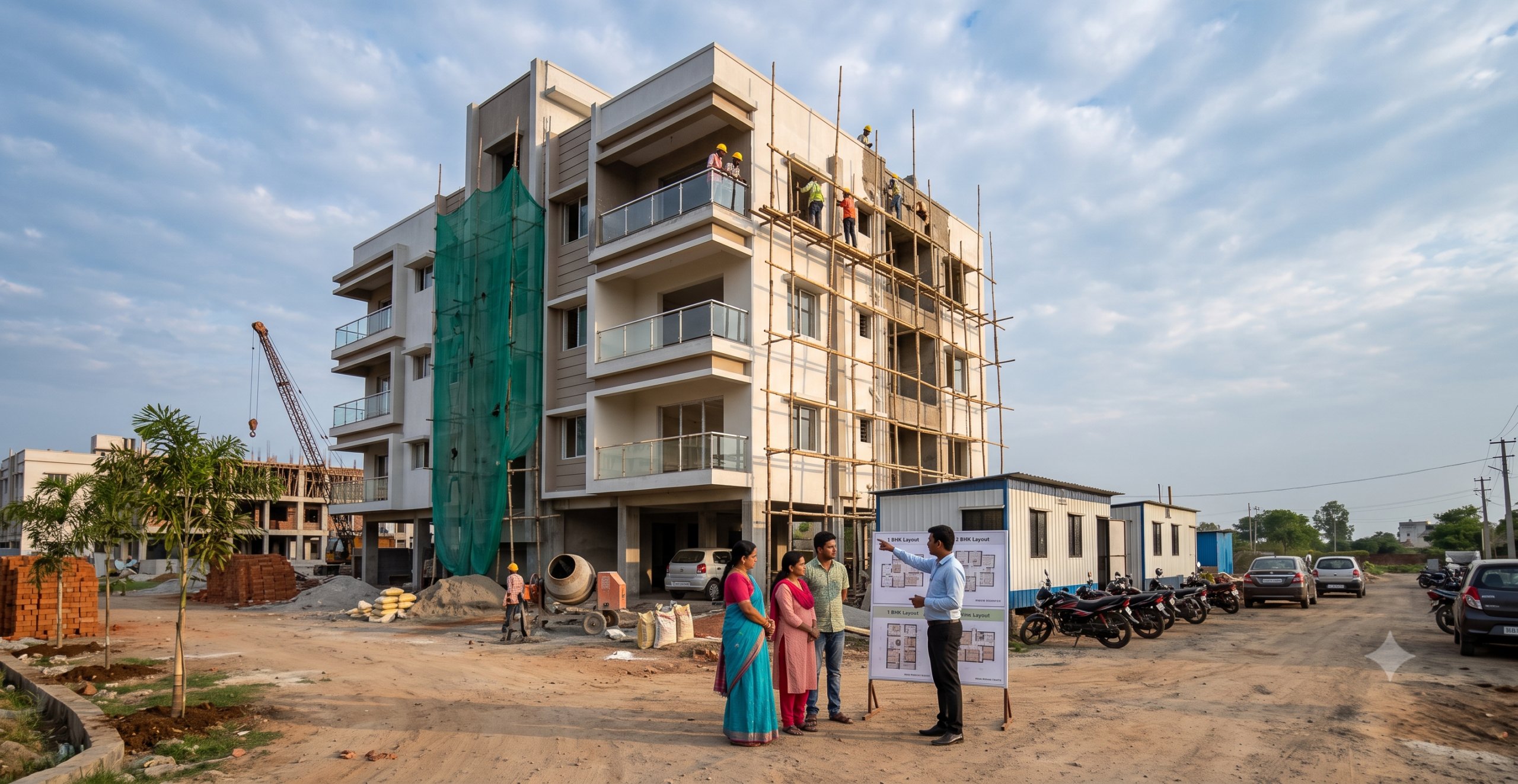
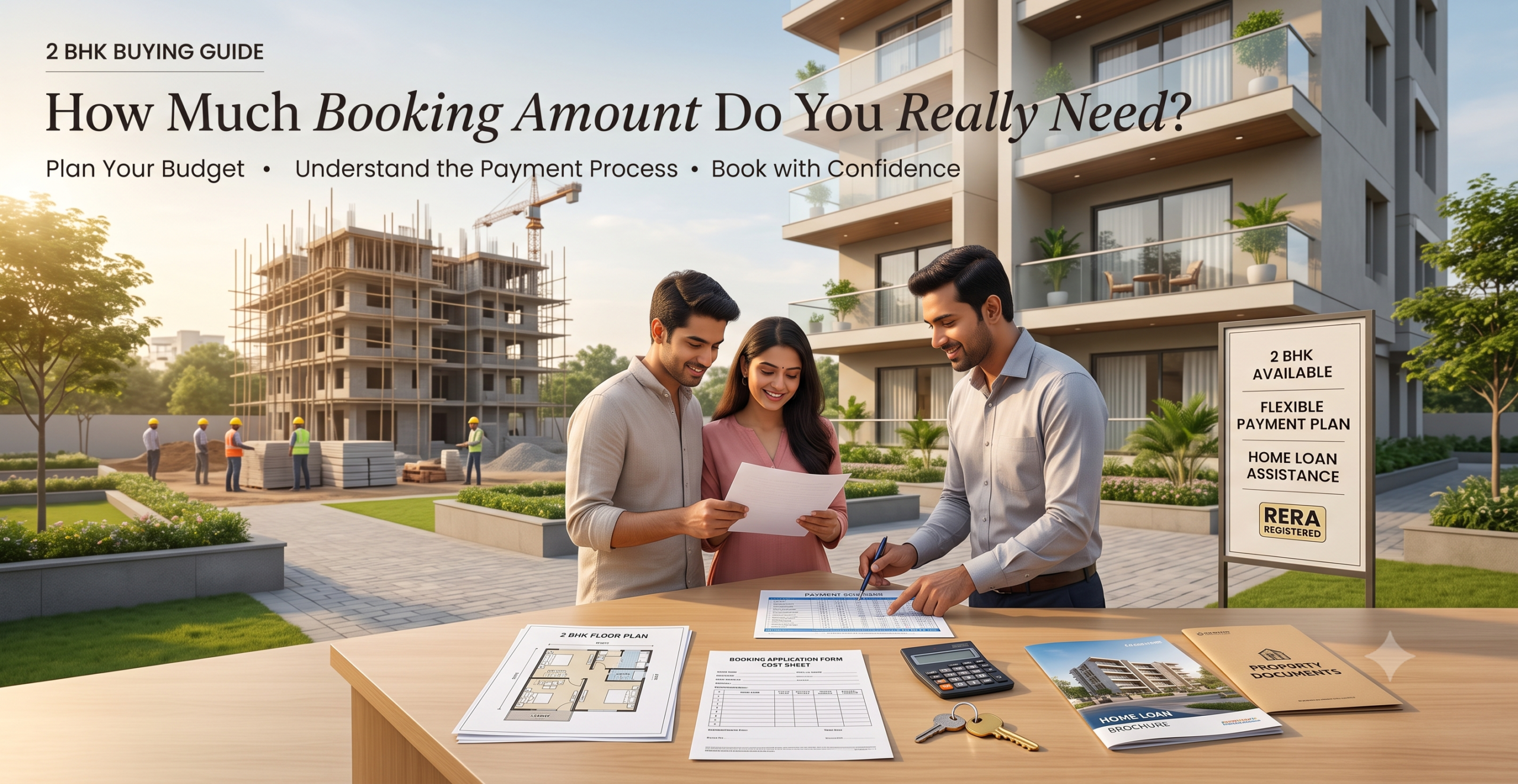
Buying a home is one of the biggest financial decisions you’ll ever make. Whether you’re planning to purchase a 1BHK, 2BHK, 3BHK, or luxury apartment, being prepared with the right paperwork can save you time, reduce stress, and prevent unexpected delays. Many homebuyers focus on choosing the perfect location, comparing floor plans, or negotiating prices, but they often overlook one of the most important parts of the buying journey—having the correct documents ready before booking a flat.
A complete list of documents needed to book a flat not only speeds up the booking process but also helps builders, banks, and legal authorities verify your identity and financial eligibility. It also plays a vital role if you are applying for a home loan, as banks require several documents before approving your loan application.
This guide explains the documents required for flat booking, why each document matters, how to verify property documents, and the common mistakes buyers should avoid. By the end of this article, you’ll have a clear property buyer checklist that will help you book your dream home with confidence.
Why Are Documents Important When Booking a Flat?
Before signing any booking form or paying the booking amount, builders and financial institutions verify several documents to ensure the transaction is secure and legally compliant. Keeping your paperwork ready can make the booking process faster and smoother.
Identity Verification
One of the main reasons developers ask for documents is to confirm the buyer’s identity. Government-issued identity proof helps prevent fraud and ensures that the property is being purchased by the correct individual. It also protects both the buyer and the builder from future legal disputes.
Legal Compliance
Property transactions involve significant financial investments, so documentation is essential for complying with government regulations. Documents such as PAN Card and Aadhaar Card are often mandatory for property purchases and registration. Proper verification also helps maintain transparent and legally valid transactions.
Faster Home Loan Processing
If you’re planning to finance your purchase through a bank, having all your documents ready can significantly speed up the home loan approval process. Banks verify your income, employment, and financial history before sanctioning a loan. Missing documents may delay approval and affect your booking timeline.
Preventing Property Fraud
Proper documentation reduces the risk of fake ownership claims, forged identities, and unauthorized property sales. Buyers should always verify both their own documents and the builder’s legal documents before making any payment.
Essential Personal Documents Required for Flat Booking
Personal documents form the foundation of the flat booking process. These documents establish your identity, address, and eligibility as a genuine buyer.
Aadhaar Card
The Aadhaar Card is one of the most commonly accepted identity documents in India. It contains your unique identification number, residential address, and biometric details. Most builders request a self-attested copy during the booking process, while banks use it for KYC verification during home loan applications.
PAN Card
A PAN Card is mandatory for most real estate transactions involving significant financial value. It helps track high-value purchases and ensures compliance with income tax regulations. Builders and banks usually require a copy of your PAN Card before processing the booking or loan application.
Address Proof
Builders need proof of your current residential address for verification purposes. Commonly accepted documents include Aadhaar Card, Passport, Driving Licence, Voter ID, utility bills, or a recent bank statement. Keeping updated address proof helps avoid unnecessary verification delays.
Passport-Size Photographs
Recent passport-size photographs are required for booking forms, agreement documents, home loan applications, and property registration. Keeping multiple copies ready ensures you won’t need to arrange them at the last minute.
Other Government Identity Proof
Depending on the builder’s requirements, additional identity documents such as a Passport, Voter ID, or Driving Licence may also be requested. Carrying both original documents and self-attested photocopies is always recommended.
Quick Tip: Store scanned copies of all personal documents in a secure cloud folder so they are easily accessible whenever required.
Financial Documents Required Before Booking a Flat
Financial documents help builders and banks evaluate your repayment capacity, especially if you’re applying for a home loan. Preparing these documents in advance can make the buying process much more efficient.
Salary Slips
Salaried employees should keep the last three to six months of salary slips ready. These documents help banks verify your monthly income and employment status. A consistent salary history improves your chances of quick loan approval.
Bank Statements
Banks usually request six months of bank statements to review your financial transactions, salary credits, savings, and existing liabilities. Regular income deposits and responsible financial management create a positive impression during loan verification.
Income Tax Returns (ITR)
Self-employed professionals and business owners are generally required to submit Income Tax Returns for the last two or three financial years. These documents demonstrate income stability and help lenders assess repayment capacity accurately.
Form 16
For salaried individuals, Form 16 serves as proof of annual income and tax deductions. It complements salary slips and strengthens your home loan application by providing verified financial information.
Employment or Business Proof
Employees may be asked to provide an employment certificate or appointment letter, while self-employed buyers may need to submit business registration documents, GST certificates, or audited financial statements. These records confirm the source and continuity of income.
Home Loan Pre-Approval Letter
If you’ve already obtained a pre-approved home loan from a bank, carrying the sanction or pre-approval letter can speed up the flat booking process. Builders often prefer buyers with pre-approved financing because it reduces uncertainty during the transaction.
Preparing all financial documents before visiting the builder’s office saves time, reduces paperwork, and increases your confidence during negotiations.
Property Documents You Must Verify Before Paying the Booking Amount
Many homebuyers focus only on arranging their personal documents and finances, but verifying the builder’s legal documents is equally important. Even if a project looks attractive and is located in a prime area, you should never pay the booking amount without checking the property’s legal status. A trusted builder will always be transparent and willing to share the required documents with potential buyers.
RERA Registration Certificate
The first document every buyer should verify is the RERA Registration Certificate. Projects registered under the Real Estate (Regulation and Development) Act (RERA) provide greater transparency and accountability. A RERA-registered project includes details about construction timelines, approvals, project status, and developer information. Before booking a flat, visit your state’s RERA website and verify the registration number provided by the builder.
Approved Building Plan
An approved building plan confirms that the project has received permission from the local municipal authority. This document ensures the construction follows government regulations regarding safety, height restrictions, parking, and land usage. Buying a flat in a project without approved plans can create legal complications in the future.
Land Ownership Documents
The builder should have clear legal ownership of the land on which the project is being developed. Verify the title deed and ownership records to ensure there are no disputes regarding the property. Clear ownership protects buyers from future legal issues and ownership claims.
Encumbrance Certificate
The Encumbrance Certificate confirms that the property is free from legal liabilities such as loans, mortgages, or pending court cases. A clear certificate provides confidence that the property can be legally transferred to the buyer without hidden financial obligations.
Completion and Occupancy Certificates
If you are buying a ready-to-move apartment, ask for the Completion Certificate and Occupancy Certificate. The Completion Certificate confirms that the construction follows the approved building plan, while the Occupancy Certificate certifies that the building is safe and ready for residents. Without these certificates, utility connections and future resale may become difficult.
Documents Required for Home Loan Approval
For many buyers, purchasing a flat involves financing through a home loan. Banks carefully review your personal and financial information before approving the loan. Preparing these documents in advance can significantly reduce processing time.
KYC Documents
Banks require standard Know Your Customer (KYC) documents, including your Aadhaar Card, PAN Card, Passport, Driving Licence, or Voter ID. These documents verify your identity and address while ensuring compliance with banking regulations.
Income Verification Documents
Income verification helps the lender assess your repayment ability. Salaried employees generally submit salary slips, Form 16, and bank statements, while self-employed applicants provide Income Tax Returns, audited financial statements, GST registration, and business proof. Strong financial records improve your chances of receiving better loan terms.
Property Verification Documents
Banks also examine the legal documents of the property before approving the loan. They verify RERA registration, approved building plans, title deeds, and sale agreements to ensure the property has no legal issues. This protects both the buyer and the lending institution.
Loan Sanction Letter
Once the bank approves your application, it issues a Loan Sanction Letter outlining the approved loan amount, interest rate, repayment tenure, and other terms. Carefully read this document before accepting the loan offer.
Co-Applicant Documents
If you are purchasing the property jointly with your spouse or another family member, each co-applicant must submit identity proof, address proof, income documents, photographs, and bank statements. Keeping all documents ready avoids unnecessary delays during loan processing.
Common Documentation Mistakes Home Buyers Should Avoid
Even experienced buyers sometimes make mistakes during the documentation process. These errors can delay booking, loan approval, or even property registration. Understanding these common mistakes helps ensure a smoother buying experience.
Paying the Booking Amount Without Verification
Never rush into paying the booking amount simply because of attractive offers or limited-time discounts. Always verify the builder’s legal documents, RERA registration, and project approvals before making any payment. Taking a little extra time can protect you from significant financial risks.
Ignoring Hidden Charges
Many buyers focus only on the apartment price and overlook additional expenses such as GST, maintenance charges, parking fees, clubhouse membership, legal charges, and registration costs. Ask for a detailed cost sheet before confirming your booking.
Not Reading the Booking Agreement
The booking agreement contains important information regarding payment schedules, possession dates, cancellation policies, construction timelines, and penalty clauses. Read every section carefully and clarify any doubts before signing.
Submitting Incomplete Documents
Missing signatures, outdated address proof, expired identity cards, or incomplete income documents can delay both booking and loan approval. Before visiting the builder’s office, organize all required documents in a dedicated file.
Forgetting to Keep Copies
Always keep both printed and digital copies of every document you submit. Save payment receipts, booking forms, agreements, and correspondence safely. These records can be valuable if any dispute arises in the future.
Final Checklist Before Booking Your Dream Flat
Before making the final booking payment, take a few minutes to review every aspect of the purchase. A careful review today can save months of stress later.
Verify Your Personal Documents
Ensure your Aadhaar Card, PAN Card, address proof, passport-size photographs, and other identity documents are current and accurate. If applying jointly, verify that every co-applicant has completed their paperwork.
Organize Your Financial Documents
Keep salary slips, bank statements, Form 16, Income Tax Returns, employment proof, and loan sanction letters arranged in one folder. Organized documentation speeds up both builder verification and bank processing.
Confirm the Builder’s Legal Documents
Check the RERA registration, land ownership records, approved building plan, Encumbrance Certificate, Occupancy Certificate, and Completion Certificate. Buying from a legally compliant project offers greater peace of mind.
Understand Every Payment
Ask the builder for a complete price breakup, including booking amount, GST, maintenance charges, parking costs, registration fees, and any additional expenses. Clear communication helps avoid unexpected costs later.
Keep Every Receipt Safe
Whether you pay online, by cheque, or through bank transfer, collect official payment receipts immediately. Store both digital and printed copies for future reference during registration or resale.
By following this simple checklist, you can confidently complete your flat booking while minimizing legal, financial, and administrative risks.
Frequently Asked Questions
1. What documents are required to book a flat?
The basic documents include an Aadhaar Card, PAN Card, address proof, passport-size photographs, identity proof, and the booking amount. If you are applying for a home loan, additional financial documents such as salary slips, bank statements, Form 16, and Income Tax Returns may also be required.
2. Is a PAN Card mandatory for purchasing a flat?
Yes. In most property transactions, a PAN Card is required for tax compliance, home loan applications, and property registration. It is considered one of the essential documents for buying residential property.
3. Which builder documents should I verify before booking?
Always verify the RERA Registration Certificate, approved building plan, land ownership documents, Encumbrance Certificate, Completion Certificate, Occupancy Certificate, and Sale Agreement before making any payment.
4. Can I book a flat without applying for a home loan?
Yes. Buyers who are making a self-financed purchase only need the required personal documents and payment details. Financial documents are mainly required when applying for bank financing.
5. Why is RERA registration important?
RERA registration increases transparency and protects homebuyers by ensuring that the project follows government regulations regarding approvals, construction timelines, and developer accountability.
Conclusion
Preparing the complete list of documents needed to book a flat is one of the smartest steps you can take before purchasing your dream home. Whether you are buying your first 1BHK apartment, upgrading to a spacious 2BHK, investing in a 3BHK family home, or choosing a luxury apartment, having your documents ready makes the entire process faster and more secure.
At the same time, verifying the builder’s legal approvals is just as important as organizing your personal paperwork. Never hesitate to ask questions, review agreements carefully, and confirm every legal document before paying the booking amount. A well-informed buyer is always in a stronger position to make confident decisions and protect their investment for years to come.
With proper planning, complete documentation, and careful verification, your journey from selecting a flat to receiving the keys to your new home can be smooth, transparent, and stress-free.